

posted 29th July 2026
One of the great attractions of moving to Cyprus is that everyday life can feel just a little bit like being on holiday.
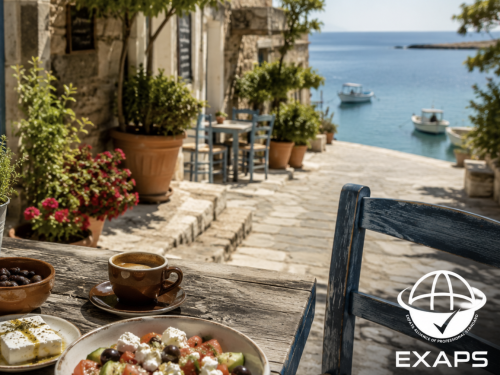
The sun shines more often. Lunch can happen outside. A quick coffee can come with a sea view. Even a routine drive to the supermarket may involve a glimpse of mountains, coastline or a village square that looks as though it was designed specifically to make your friends back home jealous. That is part of the magic.
But there is a difference between enjoying the holiday style lifestyle and accidentally living like a tourist all year round. People moving to Cyprus often arrive with enthusiasm, limited local knowledge and a strong desire to enjoy everything immediately. That is completely understandable. After all, nobody moves to the Mediterranean so they can sit indoors comparing the price of tomatoes.
However, the early months can become expensive if every meal, service, purchase and outing is chosen through the eyes of a visitor rather than a resident.
Tourist areas exist for a reason. They are convenient, visible, lively and often very enjoyable. There is nothing wrong with using them. The issue is relying on them for everything.
Cyprus can offer a fantastic lifestyle, but the best version of it is usually found when people learn how to enjoy the island like residents, not just visitors with a longer suitcase.
The Tourist Mindset Can Be Expensive
When people are on holiday, they behave differently. They eat out more. They say yes more quickly. They buy things because they are convenient. They accept higher prices because they are only there for a week or two. They do not necessarily compare options because time is limited and the main objective is enjoyment.
That mindset is perfectly reasonable on holiday. It becomes less helpful when Cyprus becomes home. A family that eats in beachfront restaurants several times a week, buys groceries only from the closest convenience shop, books every service through the first website they find and spends weekends only in obvious resort areas may quickly wonder why the cost of living feels higher than expected.
The answer may not be that Cyprus is unaffordable. It may simply be that they are still living by holiday rules. A holiday budget is built for a short period of enjoyment. A resident budget has to survive Tuesday.
Tourist Areas Are Not the Enemy
It is important not to overcorrect. Avoiding tourist traps does not mean avoiding tourist areas altogether.
Some of the most popular parts of Cyprus are popular because they are genuinely lovely. Harbour fronts, beach promenades, resort towns, marinas and old town squares can be enjoyable places to eat, drink, walk and spend time.
The problem is not the location itself. The problem is assuming that the most visible option is always the best value, best quality or most authentic.
A café with a beautiful sea view may charge more because the view is part of the experience. That is not necessarily unfair. Sometimes paying for the setting is entirely worth it.
The key is knowing when you are paying for the view and deciding that you are happy to do so. There is a big difference between choosing a sunset drink because it feels special and accidentally paying premium prices for ordinary everyday choices because they happen to be near the beach.
Residents learn to separate the treat from the habit. That is where the savings begin.
Learn the Local Price Rhythm
Every country has its own pricing rhythm. Cyprus is no different.
Prices can vary depending on location, season, target customer, level of convenience and whether the business is serving mainly residents, tourists or a mixture of both.
A restaurant in a prime tourist location may be priced differently from a family run taverna a few streets back. A kiosk near the beach may be more expensive than a supermarket. A service provider advertising heavily to foreign newcomers may charge differently from one mainly used by local residents.
This does not always mean someone is being overcharged. Sometimes the business has higher rent, higher staffing costs or offers genuine convenience. Sometimes the customer is paying for location, speed or language support.
But new residents should still learn what normal looks like. After a few months, you begin to recognise when a price feels reasonable and when it has wandered into “fresh off the plane” territory.
The best way to build that knowledge is simple. Compare!
Visit different supermarkets. Try different cafés. Ask neighbours where they buy household items. Notice where local families eat. Speak to long term residents before booking major services.
Local knowledge is not collected in one grand moment. It arrives slowly, usually between buying fruit, finding a plumber and discovering that the best bakery was not the one with the largest sign.
Follow Residents, Not Just Reviews
Online reviews can be helpful, but they are not always written from a resident’s perspective.
A tourist may give five stars to a restaurant because the staff were friendly, the sea view was beautiful and the portion of chips was heroic. A resident may judge the same place differently because they are thinking about consistency, value, parking, service throughout the year and whether they would return regularly.
Both views can be valid. They are simply measuring different things. When moving to Cyprus, pay attention to where residents go repeatedly. Ask people who live in the area where they eat midweek, where they buy meat or fish, which mechanic they trust, which pharmacy is helpful and where they take visiting family when they want something reliable rather than flashy.
The most useful recommendations often come with phrases such as “it does not look like much from outside, but...” or “everyone around here uses them”. Those are usually worth listening to.
A glossy review page can tell you what impressed someone once. A local habit can tell you what has worked for years.
The Street Behind the Main Street Often Tells the Truth
In many places, the most expensive businesses are not necessarily the best ones. They are simply the most visible.
Main promenades, harbour fronts and busy resort roads naturally attract passing trade. That often means higher rents and a customer base that may not return regularly. Businesses in those positions can sometimes rely on location more than reputation.
A short walk away, the picture may change. The restaurant two streets back may rely more heavily on repeat customers. The café away from the main strip may serve residents who notice if prices rise too quickly or quality falls. The shop in a residential area may be less glamorous but better value.
This is not a rule that applies every time.
Some prime location businesses are excellent, and some hidden places are hidden for a reason. But for new residents, it is worth exploring beyond the first line of businesses facing the sea.
Cyprus rewards curiosity. Sometimes the best meal is not the one with the biggest menu board. Sometimes it is the place where the owner appears mildly surprised that you found it.
Enjoy the Holiday Lifestyle Selectively
The aim is not to remove enjoyment from life. Nobody wants to move to Cyprus and spend every evening celebrating financial discipline with tap water and a spreadsheet. The point is to choose the moments that are worth paying extra for.
A beachfront dinner on a special evening may be worth every euro. A hotel brunch with visiting family may be part of the experience. A day at a beach club may be exactly what you moved for.
The problem comes when those treats become the default way of living. If every coffee is in the most expensive location, every meal is in the tourist zone and every weekend is built around paid activities, the lifestyle can start to feel much more expensive than it needs to be.
The resident version of the Cyprus lifestyle often mixes paid experiences with simple ones. A picnic by the sea. A village lunch. A walk in the mountains. A coffee in a local square. A beach afternoon with snacks from home. A barbecue with neighbours. A family swim after work.
These are not consolation prizes. They are often the things people end up loving most. The trick is not to stop enjoying Cyprus.
It is to stop paying tourist prices for every version of enjoyment.
Shop Like You Live There
Grocery shopping is one of the quickest ways to move from visitor mode to resident mode.
People on holiday often buy from the nearest shop, especially if they are staying in a resort area. That is fine for a few days. It may be less sensible as a long term pattern.
New residents should take time to understand where different products are best bought. Larger supermarkets, local fruit markets, bakeries, butchers, fishmongers and specialist shops may all play a role.
Some items may be cheaper in one place and better quality in another. Imported goods may cost more than expected. Local produce may offer better value, especially when bought seasonally.
It is also worth being flexible. Trying to recreate the exact weekly shop from your previous country can become expensive. Certain familiar brands may be available, but imported comfort can come at a premium.
There is nothing wrong with buying favourite items from home. But if every cupboard must look identical to the one you left behind, Cyprus may quietly invoice you for nostalgia.
Learning to shop locally does not mean giving everything up. It means discovering what Cyprus does well and building your routine around that.
Be Careful With Convenience
Convenience is useful. It is also rarely free. A business that saves you time, delivers to your door, speaks your language, handles a problem quickly or sits directly beside a tourist attraction may charge more for that convenience.
Sometimes that is perfectly reasonable. When you are newly arrived, convenience has genuine value. If you are exhausted, dealing with children, waiting for furniture or trying to understand paperwork, paying a little more for something simple may be worth it.
But convenience should be a choice, not an unconscious habit. Once settled, residents can often save money by planning ahead, comparing providers and asking for recommendations rather than accepting the first available option.
The same applies to services. Whether arranging cleaning, property maintenance, car hire, airport transfers, insurance, tradespeople or professional advice, take time to understand the normal range of prices. Ask what is included. Confirm whether VAT is included. Get written terms for larger jobs.
The cheapest option is not always best, but neither is the easiest option automatically the most suitable.
Convenience should reduce stress. It should not quietly become a tax on being new.
Watch the Seasonal Shift
Cyprus changes with the seasons. Some areas are busy in summer and quieter in winter. Some businesses adjust their opening hours, staffing and pricing depending on demand. Tourist heavy locations may feel very different in August compared with February.
New residents should pay attention to this seasonal rhythm. A place that feels lively and full of choice during a summer viewing trip may be much quieter outside the peak months. Equally, somewhere that feels too busy in August may become far more pleasant once the tourist season eases.
Prices can also feel different across the year, particularly for accommodation, car hire, flights and tourist focused activities. This matters because residents need to live through the whole year, not just the postcard months.
A good Cyprus lifestyle is not based only on peak season experiences. It includes the quieter mornings, winter sunshine, local festivals, mountain villages, off season meals and the everyday routines that tourists rarely see.
That is where Cyprus often becomes more real and more enjoyable.
Ask Before You Assume
One of the simplest ways to avoid paying over the odds is also one of the most underused.
Ask!
Ask long term residents which supermarket they prefer. Ask where they take visitors for a good meal. Ask which beaches are worth the parking and which are better avoided at peak times. Ask what a fair price usually looks like for a common service.
Most people are happy to share local knowledge, especially if the question is asked politely and without sounding as though the entire country is being investigated for overcharging.
The wording matters.
Instead of asking, “Where can I avoid being ripped off?” try asking, “Where do locals usually go?” or “What would you recommend for good value?” That produces better answers and fewer raised eyebrows.
It also helps new residents build community. The more people you speak to, the faster Cyprus starts to feel like home rather than an extended holiday booking.
Do Not Confuse Cheap With Good Value
Avoiding tourist traps is not the same as always choosing the cheapest option. In fact, that can create a different problem.
A very low quote, very cheap rental, very cheap car or very cheap service may become expensive later if it comes with poor quality, hidden charges or no accountability.
Good value means the price makes sense for what is being provided. It does not always mean the lowest price.
When dealing with professional services, property, legal work, removals, insurance, healthcare or construction, quality and accountability matter. Saving a small amount at the beginning can cost far more if something goes wrong.
The aim is to avoid paying inflated prices because of inexperience. It is not to hunt for bargains so aggressively that common sense gets left behind.
There is a healthy middle ground between “tourist prices for everything” and “I found someone on a forum who can do it for half the price in cash”.
That middle ground is where sensible relocation usually lives.
Keep the Holiday Feeling Without the Holiday Spending
The best part of living in Cyprus is that many of its greatest pleasures do not need to be expensive. The sea is not pay-per-view. Sunsets do not issue invoices. Village walks, local markets, beach afternoons, scenic drives and lazy coffees away from the main tourist spots can all be part of daily life without turning every outing into a financial event.
A resident learns to enjoy Cyprus in layers. There is the tourist layer: beaches, restaurants, resorts, excursions and postcard moments.
There is the local layer: routines, trusted businesses, seasonal habits, quieter places and everyday value.
The best lifestyle combines both. Use the tourist layer when you want to celebrate, explore or remind yourself why you moved.
Use the local layer to build a sustainable life. That way, Cyprus remains special without becoming unnecessarily expensive.
How EXAPS Can Help
Moving to Cyprus involves more than finding a property and booking a flight. New residents often need support from estate agents, lawyers, accountants, valuers, relocation consultants, shipping companies, insurance providers, healthcare professionals and other service providers. The challenge is knowing where to begin and who to trust.
EXAPS (Expats Alliance of Professional Standard) is an independent membership alliance and directory for professional businesses serving people moving abroad.
Members commit to the EXAPS Code of Conduct, which includes expectations around transparency, fair treatment, clear communication, accountability and professional conduct.
EXAPS is not a regulator and does not replace a person’s own checks or independent advice. However, it provides a clearer starting point for people who want to deal with businesses that have publicly committed to professional standards.
For new residents trying to avoid costly mistakes, that starting point can be valuable. Good advice can help people enjoy the Cyprus lifestyle without paying unnecessary premiums simply because they are new to the island.
Final Thought
Moving to Cyprus should feel exciting. It should involve sea views, outdoor meals, village discoveries, beach days and the occasional moment where you realise ordinary life has become noticeably sunnier.
But the holiday feeling should not mean living permanently in holiday spending mode. Explore beyond the main tourist areas. Learn local prices. Ask residents for recommendations. Compare options. Understand what you are paying for. Treat convenience as a choice, not a default. Most importantly, enjoy the island as someone who lives there.
Cyprus can still feel like a holiday. It just does not need to cost like one every day.