

posted 12th March 2026
Iran situation update (March 2026): what it could mean for people moving to Cyprus - and how to stay prepared
Tensions linked to Iran continue to evolve quickly. Even when events are not directly connected to Cyprus, the knock-on effects can show up in very practical places: flight routes, airline scheduling, travel insurance wording, shipping costs, and general confidence.
This follow on article is written for people planning a move to Cyprus (rather than short-stay tourism). The aim is calm, practical preparation - not alarm.
What’s changed since our last article?
A few developments have pushed Cyprus higher up the ‘watch list’ for some governments and travellers:
• Updated official travel messaging: The UK’s FCDO has added a clear note that regional escalation poses significant security risks and has led to travel disruption, and it references a suspected drone impact at RAF Akrotiri on 2 March 2026.
• Increased international caution: The U.S. State Department has issued a Level 3 “Reconsider Travel” advisory for Cyprus, citing the threat of armed conflict and potential disruption.
• Real-world travel disruption (mainly region-to-region): European flights to Cyprus have generally continued, but there have been cancellations on some routes between Cyprus and Middle Eastern destinations.
• Local restrictions: Cyprus has announced a ban on private drone use (government departments only) until further notice.
None of this means ‘don’t move to Cyprus’. It does mean that if you’re relocating in the next 4–12 weeks, it’s sensible to build a bit more resilience into your plan.
1) Your move timeline: plan for friction, not failure
If you’re moving to Cyprus, the biggest risk is usually not safety on the ground - it’s logistics friction:
• A flight gets rescheduled and your arrival date shifts.
• A shipment takes longer (or costs more) due to insurance and routing.
• A key appointment (banking, property, school, medical) needs moving by a week.
Practical tips:
• Build a 2–3 week buffer into your relocation plan where possible.
• Avoid scheduling ‘must happen’ milestones (e.g., lease start, school start, furniture delivery) within 48 hours of arrival.
• If you can, arrive first with essentials, then ship non-essentials later.
2) Air travel: what to watch if you’re relocating
Relocation travel is different from a holiday. You’re often travelling with documents, pets, extra luggage, and tight timelines.
What’s most likely in a fast-changing regional situation:
• Short-notice airline schedule changes
• Rerouting (longer flight times)
• Higher fares on certain routes
Practical tips:
• Choose tickets with flexible change options.
• Keep digital copies of passports, visas/residency documents, marriage/birth certificates, insurance, and key contracts.
• If you’re connecting through hubs, allow extra time and avoid minimum connection itineraries.
3) Travel insurance and relocation cover: check the wording
Travel advisories can affect insurance validity. If you’re moving, you may have a mix of:
• Travel insurance
• Private medical cover
• Shipping insurance
• Rental car cover
• Home insurance (start date)
Practical tips:
• Re-check your policy wording for “travel disruption,” “regional escalation,” “cancellation triggers” and other things similar.
• If you’re shipping belongings, confirm what’s covered if routes change or delays occur.
4) Shipping, freight, and cost of living: the indirect effects
Even when Cyprus is operating normally, wider regional risk can affect:
• Shipping insurance premiums
• Freight costs
• Fuel prices (which feed into transport and some goods)
Practical tips:
• If you’re shipping a container, ask your provider what happens if routing changes and whether costs can move.
• Consider buying critical settling-in items locally first (SIM, basic kitchen items, bedding), then upgrade later.
• Keep a modest contingency fund for the first 1–2 months in case costs spike.
5) On-the-ground reality: what this usually looks like day-to-day
For most residents, the day-to-day impact tends to be:
• More news coverage
• More questions from friends/family abroad
• Occasional travel disruption
It’s rarely a constant, visible disruption to normal life. Cyprus has long experience operating as a stable base in a complex region.
6) A simple relocation readiness checklist (calm, practical)
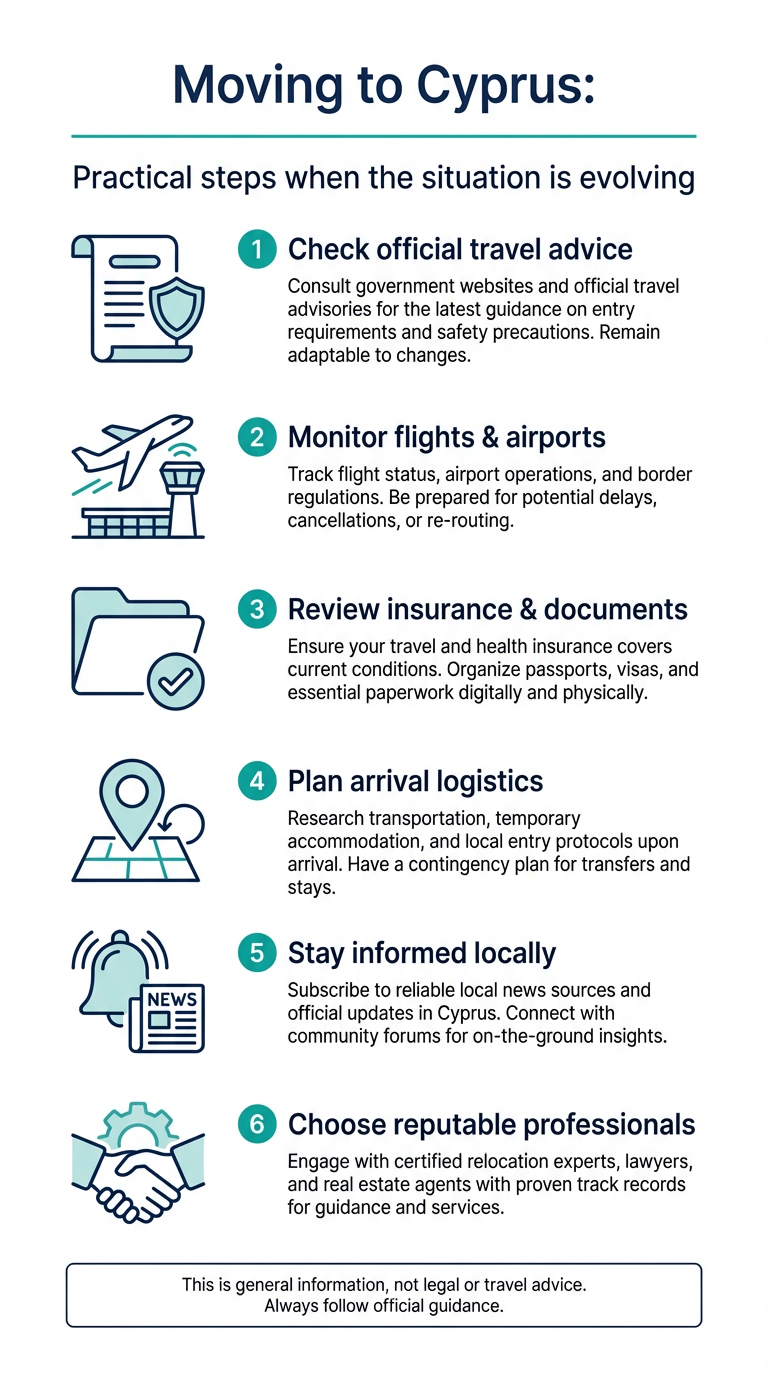
If you’re moving to Cyprus soon, this checklist covers most scenarios:
1. Documents: Keep originals secure and carry digital backups.
2. Arrival plan:Have a backup plan for 48–72 hours (accommodation, transport, cash access).
3. Communications:Ensure roaming works on arrival; have a plan for local SIM/eSIM.
4. Insurance:Confirm what’s covered if flights are disrupted or routes change.
5. Shipping:Separate essentials vs non-essentials; insure appropriately.
6. Money: Keep some liquidity accessible across two methods (e.g., card + backup).
7. Information hygiene: Pick 1–2 reliable sources and avoid constant doom-scrolling.
Closing thought
Regional uncertainty is never welcome - but it does not automatically translate into day-to-day disruption in Cyprus.
For people relocating, the most useful approach is steady, practical preparation: build buffers, protect your documents, check insurance wording, and keep your plans flexible.
Note: This article is general information, not legal, financial, or travel advice. Always check official airline notices and government travel guidance for your specific route and circumstances.