


posted 30th March 2026
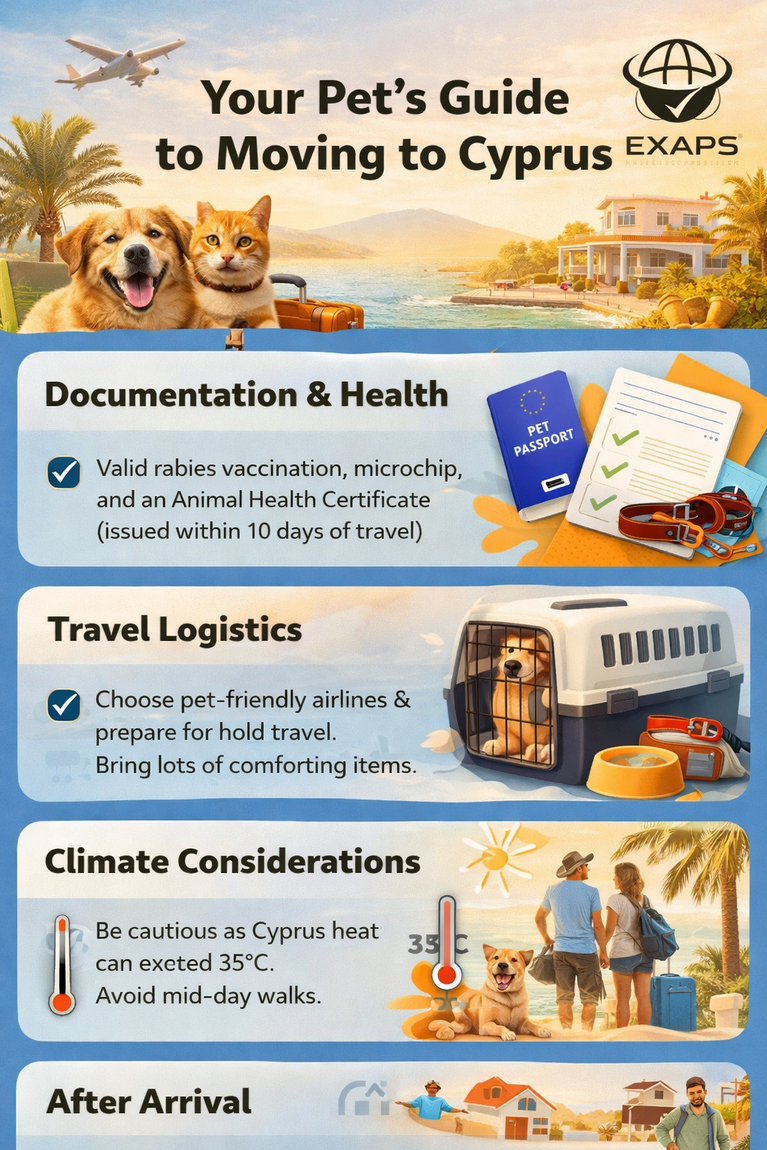
Relocating to Cyprus is an exciting chapter. Sunshine, a slower pace of life, and a fresh start. But if you’re bringing a pet along for the journey (whether that’s a loyal dog, an independent cat, or something a little more exotic) there’s a lot more to think about than simply booking a flight.
Moving a pet internationally isn’t difficult… but it IS detailed. And the people who get caught out are usually the ones who assume it will all just ‘fall into place’.
It won’t.
The good news? With the right preparation, your pet’s move can be smooth, safe, and stress-free - for both of you.
The Paperwork: It’s More Than Just a Pet Passport
Let’s start with the part most people underestimate - documentation.
To bring a pet into Cyprus from the UK, your animal must meet strict entry requirements. This isn’t optional, and missing just one step can result in delays, quarantine, or even refusal of entry.
At a minimum, you’ll need:
• A valid Animal Health Certificate (AHC), issued within 10 days of travel
• A microchip (and it must be implanted before the rabies vaccination)
• A valid rabies vaccination (given at least 21 days before travel)
Sounds simple enough - but timing is everything. If the order is wrong (for example, vaccinating before microchipping), the entire process can be invalidated.
And here’s something people often forget: the AHC is not a one-time ‘passport’. It’s a travel-specific document, meaning it has a limited validity window. Miss that window, and you’re starting again.
Flying Your Pet: Not All Airlines Are Equal
One of the biggest shocks for pet owners is discovering that not all airlines allow pets - and those that do often have strict rules.
Most pets travelling to Cyprus will go in the aircraft hold, in a regulated, temperature-controlled environment. While this is safe when handled properly, it’s understandably nerve-wracking for owners.
This is where choosing the right airline, or even a specialist pet relocation company, makes a huge difference.
Some airlines are known for being more pet-friendly, with better handling procedures and more experience. Others… less so.
And then there’s routing. Direct flights are ideal, but not always available. Stopovers can increase stress levels for your pet, particularly in warmer months.
The Heat Factor: Cyprus Isn’t Just “Warm”
Cyprus heat is not the same as a warm UK summer. In peak months, temperatures regularly exceed 35°C - and that can pose a real risk to animals, particularly during travel.
Many airlines restrict pet travel during the hottest periods of the day, or even entirely during peak summer months. This is not overcautious - it’s necessary.
Short-nosed breeds (like Bulldogs and Pugs) are especially vulnerable due to breathing difficulties in high temperatures.
Even once you arrive, the heat can take time for pets to adjust to. Walking a dog at midday in Cyprus in July isn’t just uncomfortable - it can be dangerous.
What People Forget (Until It’s Too Late)
This is where things tend to unravel. Not with the big stuff, but the smaller details that get overlooked.
One common issue is accommodation. Not all rental properties in Cyprus are pet-friendly, and those that are can be snapped up quickly. Leaving this too late can severely limit your options.
Another is local registration. Depending on where you live, your pet may need to be registered with local authorities, and microchip details should be updated to reflect your new address.
Then there’s access to veterinary care. While Cyprus has excellent vets, it’s worth researching one in advance - particularly if your pet has ongoing medical needs.
And finally, routine. Pets thrive on familiarity, and a move like this disrupts everything. New smells, new sounds, new climate. Some animals adapt quickly. Others take time.
The Journey Isn’t Just Physical - It’s Emotional Too
We often focus on the logistics, but moving a pet is also about their wellbeing.
Stress, anxiety, and behavioural changes are common during relocation. Dogs may become unsettled. Cats may hide or refuse food. This is normal - but it needs to be managed.
Simple steps can help:
• Keeping familiar items (blankets, toys) close during travel.
• Maintaining feeding routines as much as possible.
• Giving your pet time to adjust to their new surroundings gradually.
Patience is key. What feels like a holiday to you can feel like chaos to them.
Why Who You Use Matters
This is where many expats come unstuck. Not because they didn’t try, but because they relied on the wrong people.
Whether it’s a pet relocation company, a vet handling documentation, or even advice from online forums, the quality of guidance you receive matters.
Mistakes in paperwork, poor travel arrangements, or bad advice can turn what should be a straightforward move into a stressful, and expensive, experience.
At EXAPS, we believe that moving abroad should be built on trust. That’s why we’re creating a network of professionals who commit to transparency, proper standards, and accountability.
Final Thoughts: Plan Properly, Travel Confidently
Moving to Cyprus with your pet isn’t something to fear - but it is something to respect.
Get the paperwork right. Plan around the heat. Choose the right travel options. Think beyond arrival day.
Do that, and your pet won’t just make the journey, they’ll thrive in their new home. And when they’re happily stretched out in the Cyprus sunshine, you’ll know it was all worth it.