

posted 12th March 2026

Relocation Fraud When Moving to Spain - Where it Happens and How to Reduce the Risk
Moving to Spain is exciting, but its also a period when people are forced to make decisions quickly. You might be choosing a rental from abroad, paying a deposit to secure a place before you arrive, booking a removals firm, or paying for help with paperwork.
That time pressure is exactly what many relocation scams exploit.
This article explains why relocation fraud often clusters in high-demand destinations, what the most common scam patterns look like across the relocation journey, and the practical steps that reduce risk without assuming you already know how Spain works on the ground.
Where Newcomers Commonly Settle
New arrivals are not evenly spread across Spain. They tend to cluster in well-known coastal and city destinations, which is helpful for two reasons: it reflects where many newcomers look for housing and services, and it also helps explain why scammers focus their efforts.
In many expat-focused discussions and location analyses, provinces such as Alicante (Costa Blanca) and Malaga (Costa del Sol) are frequently referenced as major destinations for international movers, with Almerda also featuring strongly. In simple terms: if you’re moving to one of these areas, you’re in good company - but you’re also in a market where demand is high, newcomers are common, and opportunists know people are trying to get things done fast. After all, those dodgy time share sales people did not just disappear, there just changed their clothes.
A Clear Note on How Much Money is Lost
You’ll often see alarming claims online about how much people lose to scams when moving abroad, but it’s important to be precise.
Unfortunately, there is no single official 2025 figure that isolates money lost by people relocating to Spain due to relocation fraud. Losses are typically recorded under broader categories such as "fraud" or "scams" and "cyber-enabled fraud", without tagging whether the victim was relocating, newly arrived, or long-established.
So the safest and most accurate approach is to combine:
• Spain-wide official context (to show fraud is a real issue nationally), and
• relocation-specific scam patterns (to show where losses tend to happen during a move).
Why Relocation Fraud Concentrates in the Moving Window
Relocation fraud doesn’t usually rely on complex tricks. It relies on predictable moments when people are ready to pay.
Those moments often include a holding deposit for a rental, a reservation payment for a property purchase, an upfront fee for paperwork support, or a booking payment to a removals company.
When someone is under time pressure, dealing with a language barrier, and coordinating remotely, they’re more likely to accept a plausible story and send money before verifying identity, authority, and paperwork.
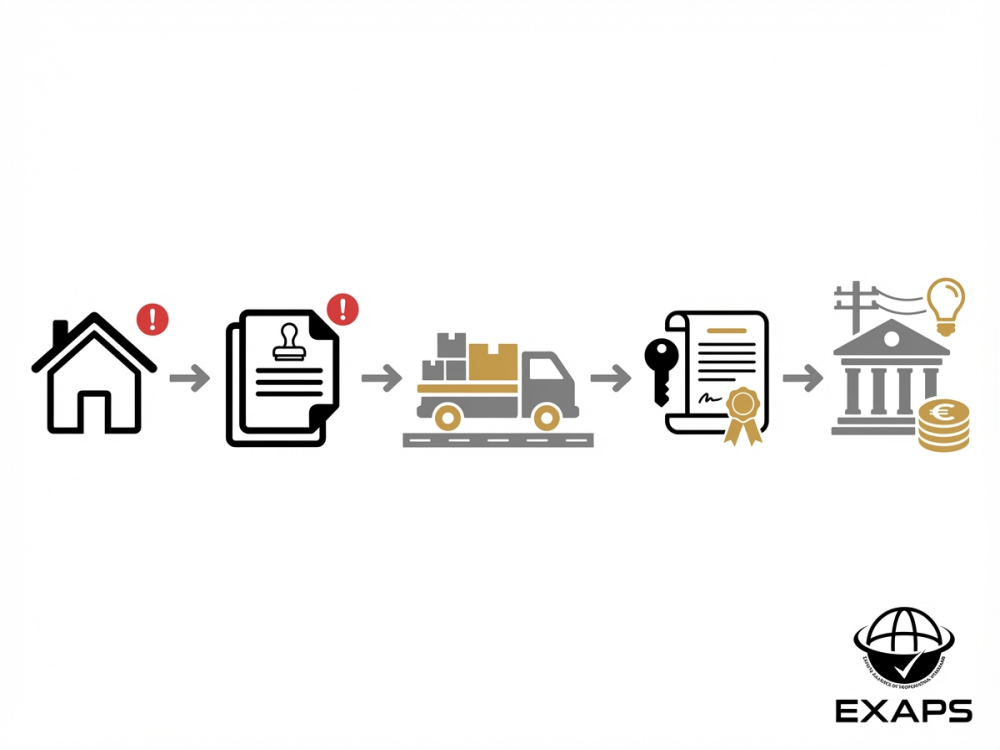
Stage 1: Accommodation (Where the Biggest Losses Often Happen)
For many movers, accommodation is the highest-risk stage. Its where the payments are largest, and its also where remote decision-making is most common.
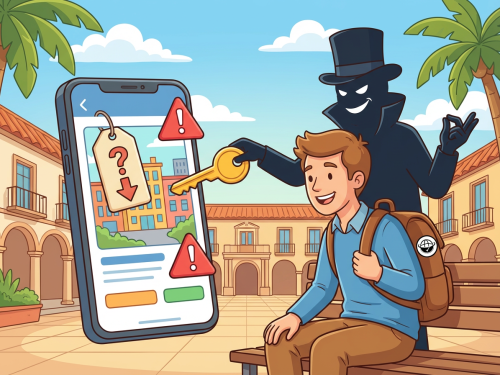
The classic pattern is ‘the fake rental listing’. The photos look real, the description is convincing, and the price is just good enough to feel like a win. Then comes the pressure: “other people are interested”, “the landlord is out of the country”, “you need to pay today to secure the keys”.
A close cousin is the ‘deposit-before-viewing request’. The scammer insists you must pay a holding deposit before you can view the property, receive keys, or verify a contract. Sometimes they impersonate a legitimate agent or copy the branding of a real agency.
In high-expat provinces such as Alicante, local police warnings and local reporting commonly highlight scam types that include bogus rentals. That matters because these areas can have a high volume of newcomers searching remotely.
The practical takeaway is simple: treat any request for money before verification as a risk event. If you slow down at the payment moment, you prevent most serious losses.
Stage 2: Paperwork and Help Services (NIE, Visas, Residency, etc)
The second pressure point is paperwork. New arrivals often pay for help with appointments, forms, translations, residency steps, and general admin.
Most legitimate providers will be clear about what they do, what they don’t do, what the fee covers, and what depends on official processes.
Scams in this area tend to follow a familiar shape: fast-track promises, vague scope, and large upfront fees.
The language is often designed to calm your anxiety: “guaranteed appointment”, “guaranteed approval”, “we have contacts”, “no need to worry”.
A good rule is this: if someone is using guarantee language, or won’t put the scope and fees in writing, treat it as a red flag. Legitimate outcomes depend on eligibility and official decision-making.
Stage 3: Moving your Possessions (Removals and Storage)
Removals fraud is less talked about than rental scams, but it can be expensive when it happens.
Common patterns include unrealistically low quotes that later inflate, requests for large upfront payments followed by non-delivery, or disputes where goods are delayed unless additional fees are paid.
The safest approach is boring, but it works. Use a written inventory, insist on clear terms, and choose a provider whose identity can be verified (real address, real trading history, and a complaints process that exists beyond a mobile number and a messaging app).
If a quote is dramatically cheaper than every other quote, assume you're missing information and ask what is excluded. In relocation fraud, cheap is often the opening move.
Stage 4: Property Purchase (If You’re Buying Rather Than Renting)
Not every mover buys property, but for those who do, the risk often sits around reservation fees and pressure to move money quickly.
A common mistake is treating the transaction as one blended relationship, where the person showing you properties is also the person guiding you on what to sign and when to pay.
The key message is to separate roles. Estate agents sell property. Independent legal advice verifies what you are buying, what you are signing, and what you are committing to financially.
If you feel rushed, pause. Pressure is not proof of legitimacy.
Stage 5: Settling In (Utilities, Banking, and Impersonation Scams)
Once you arrive, a different kind of fraud can appear: impersonation.
Newcomers are opening bank accounts, setting up utilities, registering for services, and expecting official communications. That makes it easier for a scammer to send a convincing message that looks like its from a bank, a utility provider, or an official body.
These aren't always moving scams in the narrow sense, but they often hit during the relocation window because your admin load is high and your baseline for normal is still forming.
A practical line to remember is: don't trust inbound contact. Use official channels you find independently, and keep a simple log of who you've paid, what for, and when.
What EXAPS Can (and Can’t) Promise
When you're reading advice about relocation fraud, its worth being cautious about anyone claiming they can eliminate risk entirely.
EXAPS exists to help expats find trusted, reliable, and ethical service providers abroad. However, EXAPS is not a regulator, ombudsman, or accreditation body, and it does not provide legal or financial advice. While standards, transparency, and checks can reduce risk, no directory or trust mark can guarantee outcomes.
The aim is to help people make better decisions, spot red flags earlier, and avoid the most common payment traps.
The Simplest Anti-Fraud Habit for Movers
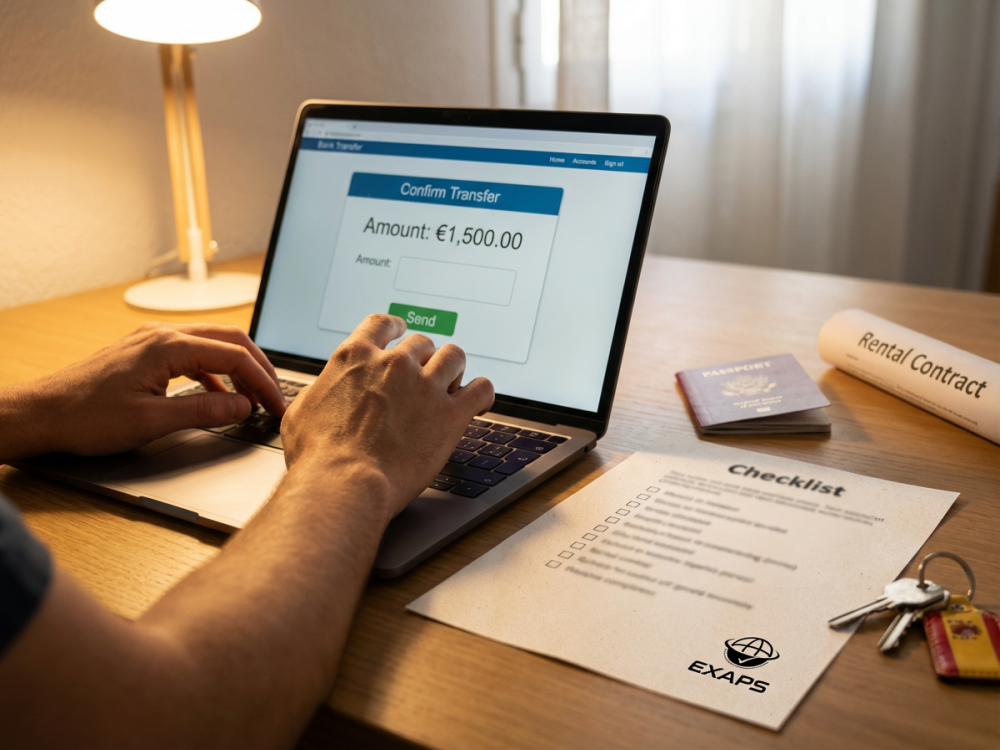
If you take only one idea from this article, make it this: Slow Down Payments!
Most serious losses happen when money is sent before identity, authority, and paperwork are properly verified. Scammers don’t need you to be careless - they just need you to be rushed.
If you’re moving to a high-demand destination such as Alicante, Mlaga, or Almerda - assume you’ll see more urgency tactics, more too good to be true offers, and more pressure to pay quickly. That doesn’t mean you can’t find excellent providers and great housing. It just means your verification steps matter more, not less.
Sources
• Moving to Spain (expat location analysis citing INE methodology): https://movingtospain.com/spain-expat-report/
• Spain Ministry of the Interior (crime balance report, 2025): https://www.interior.gob.es/opencms/export/sites/default/.galleries/galeria-de-prensa/documentos-y-multimedia/balances-e-informes/2025/Balance-de-Criminalidad_Cuarto_Trimestre_2025.pdf
• Diario de Alicante (police warning roundup, includes scams such as fake rentals): https://diariodealicante.net/en/Alicante-National-Police-scams/
• Murcia Today (local reporting on scams in Alicante, mentions bogus rentals): https://murciatoday.com/scams-on-the-rise-in-alicante-as-police-warn-of-growing-threats_1000256179-a.html